


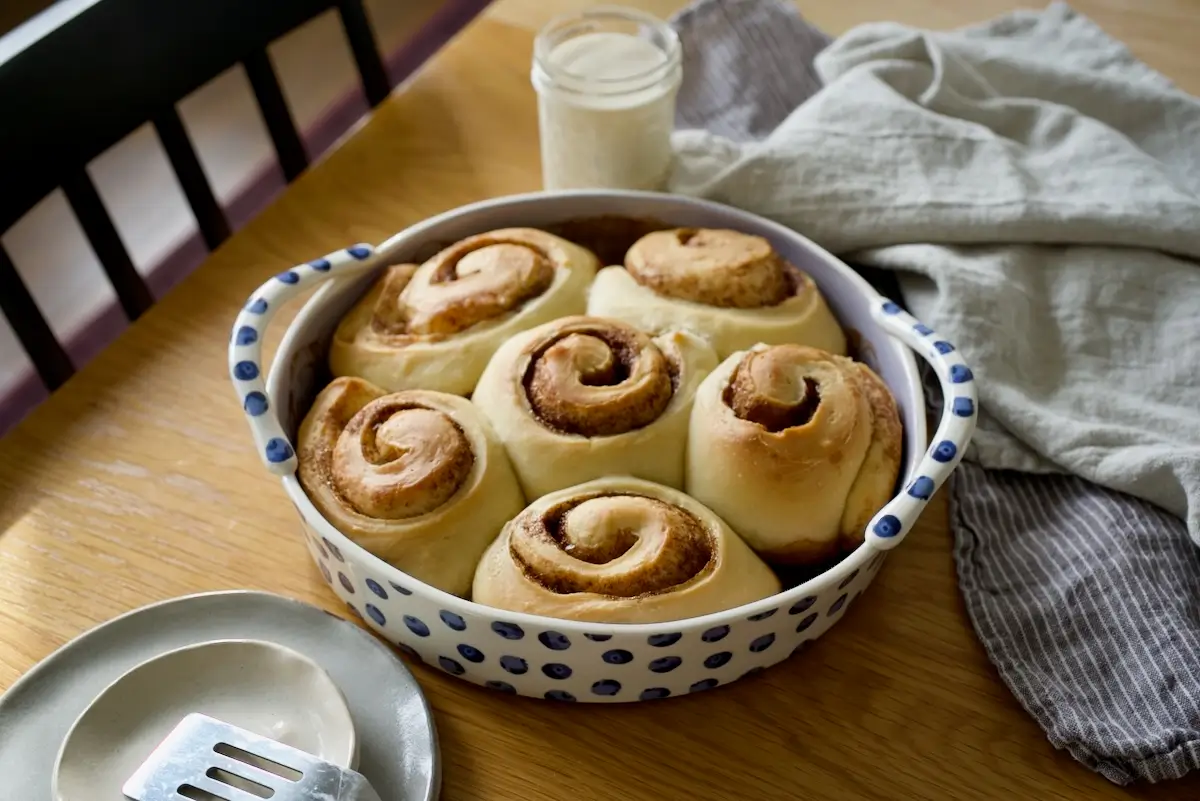
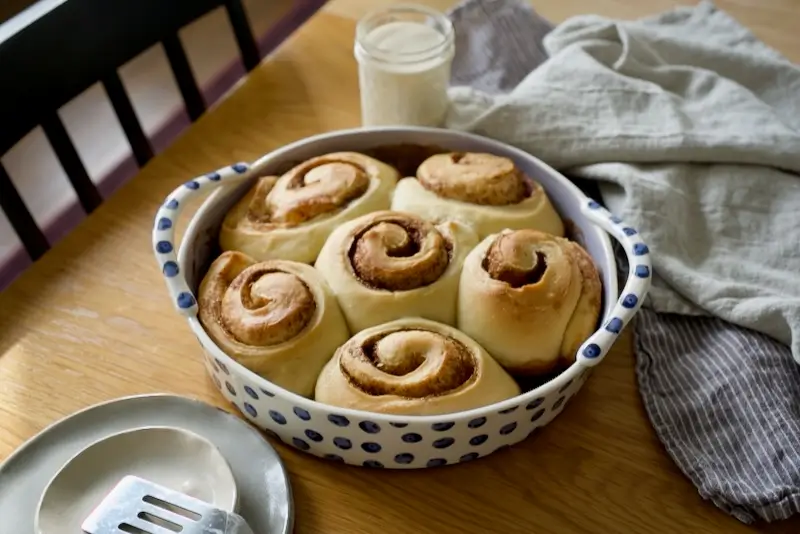
These cinnamon rolls are everything you want them to be: soft centers, golden edges, and that classic cinnamon-sugar swirl in every bite. The dough is simple and forgiving, and the whole process feels approachable—even if you’re not baking rolls every weekend.
Why you’ll love this recipe
- Perfectly sized for a smaller household
- No stand mixer required
- Soft, fluffy texture with a rich cinnamon filling
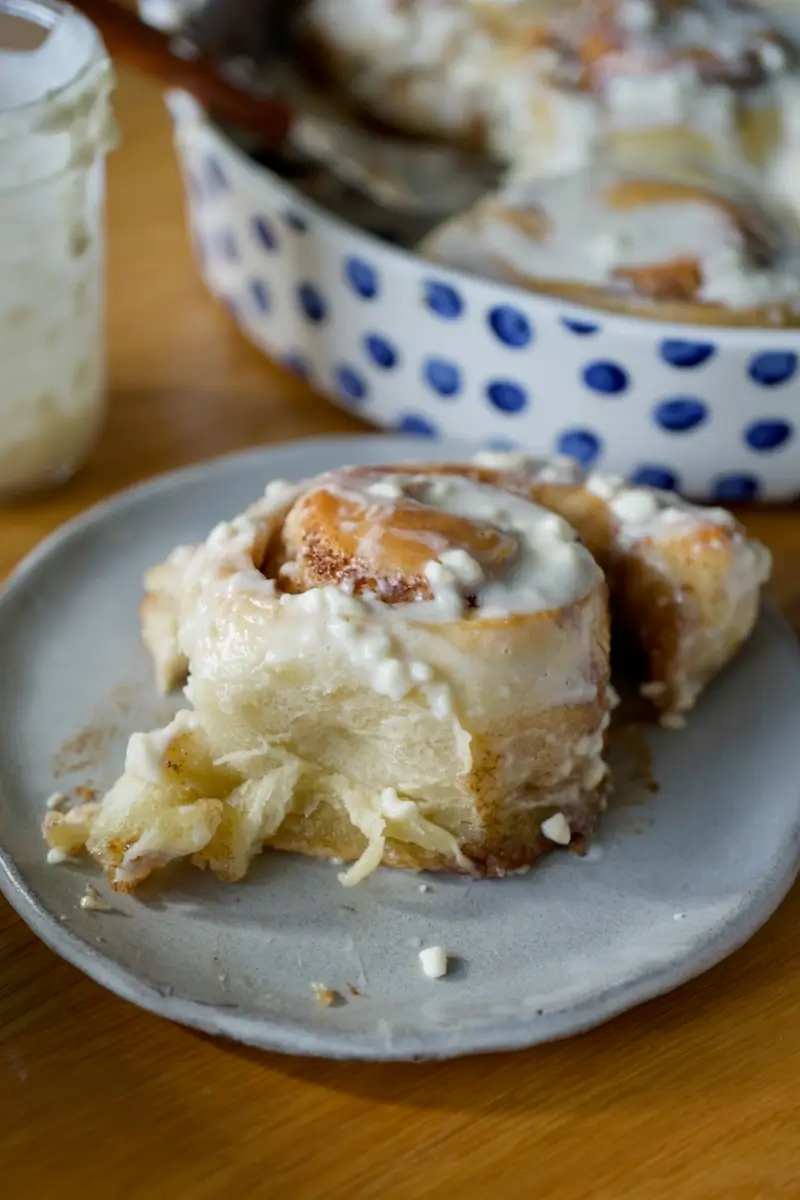
- Cream cheese frosting that melts right into the rolls
Tips for the Best Cinnamon Rolls
A few small things can make a big difference when it comes to cinnamon rolls. Here are my go-to tips to make sure they turn out soft, fluffy, and just the right amount of gooey every time.
- Make sure your milk isn’t too hot. You’re aiming for warm, not hot. If it’s too hot, it can kill the yeast. If it’s too cool, the dough just won’t rise as well. The ideal temp is 100-110˚F.
- Don’t overwork the dough. This is a soft, slightly sticky dough—and that’s what you want. Add just enough flour so it’s manageable, but don’t overdo it or the rolls can turn dense instead of fluffy.
- Roll the dough evenly. Try to keep your rectangle an even thickness so the rolls bake uniformly. It doesn’t have to be perfect, just close enough that you don’t end up with some overbaked and some underbaked.
- **Spread the filling all the way to the edges.**This is what gives you that cinnamon-sugar swirl in every bite. No dry edges here.
- Use floss to cut the rolls. It sounds a little extra, but it really works. Sliding unflavored floss under the log and pulling it across gives you clean cuts without squishing the rolls.
- Let them rise until puffy. Both rises matter here. If the rolls look noticeably bigger and a little airy before baking, you’re in a good spot.
- Don’t overbake. You’re looking for lightly golden tops. Overbaking is the fastest way to lose that soft, gooey texture.
- Frost while warm. Adding the frosting while the rolls are still warm lets it melt into all the swirls, which is exactly what you want.
Make Ahead
If you want fresh cinnamon rolls in the morning without starting from scratch, you can prep them the night before. After placing the cut rolls in the pan and letting them rise, cover tightly and refrigerate overnight. In the morning, let them sit at room temperature for about 30–45 minutes while the oven preheats, then bake as directed.
You can also freeze the rolls after the second rise. Just cover well and freeze. When ready to bake, thaw in the fridge overnight, bring to room temperature, and bake.
Storage
Store leftover cinnamon rolls covered at room temperature for up to 2 days, or in the fridge for up to 4 days. Warm them slightly before serving to bring back that soft, fresh-baked texture.
If you’ve already frosted them, they’ll still reheat well—just a few seconds in the microwave is all they need.
Commonly Asked Questions
Why didn’t my cinnamon roll dough rise?
The most common reason is temperature. If your milk was too hot, it can kill the yeast. If it was too cool, the yeast may not activate properly. You also want to make sure your dough is rising in a warm spot—think slightly cozy, not drafty. And if your yeast has been sitting in the pantry for a while, it might be expired.
How do I know when the dough has risen enough?
It should look noticeably puffed and close to doubled in size. If you gently press it with your finger, the indentation should slowly spring back.
Why are my cinnamon rolls dense instead of fluffy?
This usually comes down to too much flour or not enough rise time. The dough should be soft and slightly tacky before rising. Adding too much flour can make the rolls heavy instead of light and fluffy.





Comments